Introduction
During my tenure as Managing Director of Ronik Design, I led three strategic initiatives for WNYC, New York’s flagship public-radio station:
- Infomagical, an SMS-driven listener experiment for the Note to Self podcast
- WNYC Platform, a redesign concept for the station’s web platform
- Pique, a podcast app concept developed in a design sprint
Each was a different shape of engagement: a shipped product, a redesign concept, and a sprint. Together they cover most of what running an agency for a media client involves.
Leadership Approach
At Ronik I was both the UX lead and the person running the account. I was the main point of contact between the agency and WNYC, and I managed the designers and developers on our side.
That meant keeping WNYC’s engineers, producers, and executives informed at the level of detail each needed, and adjusting our process as the projects changed shape. All three did.
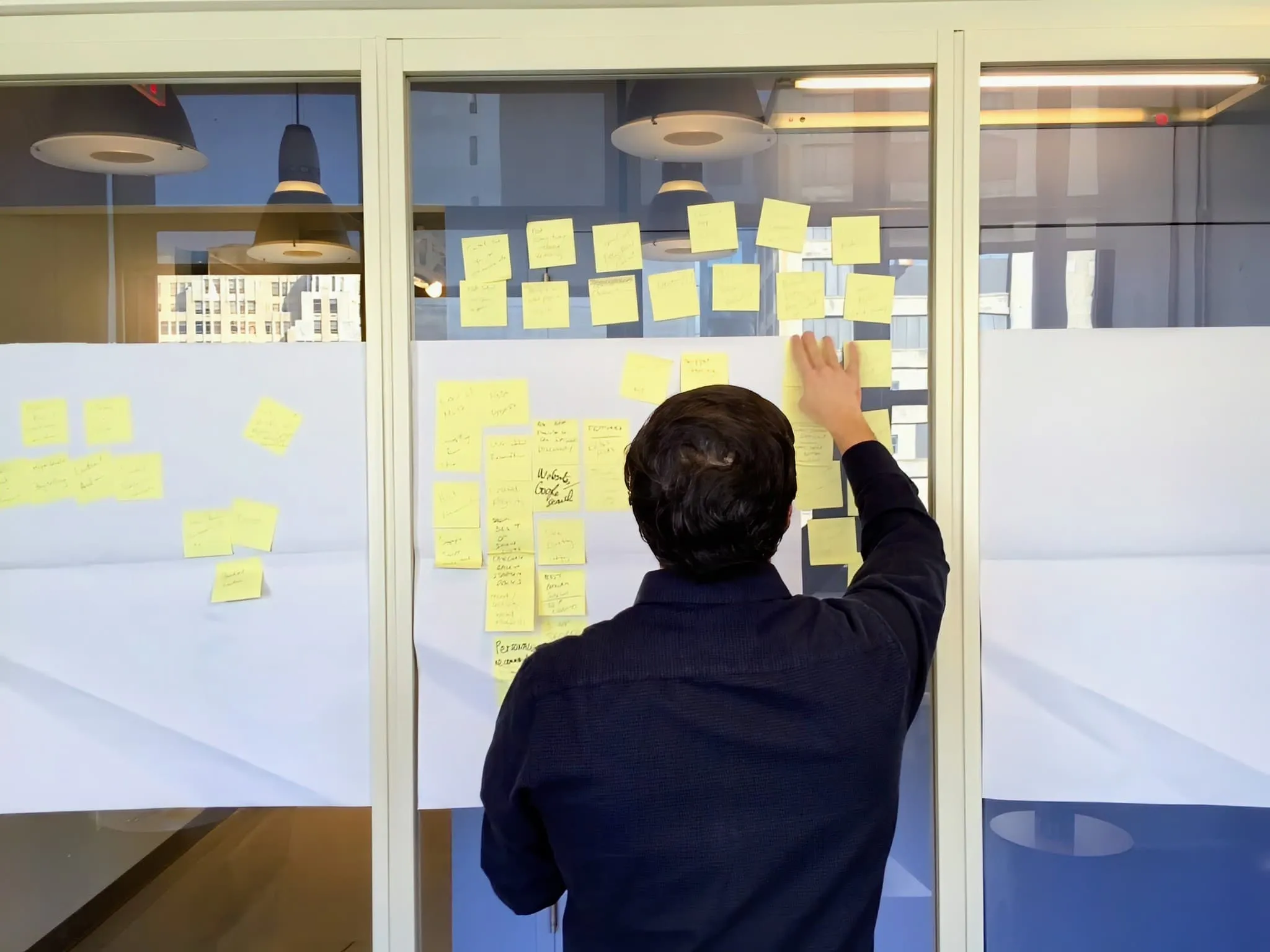
Mark leading a Design Sprint session at the WNYC office in Manhattan.
Project 1: Infomagical, an interactive experience for WNYC’s Note to Self podcast
Infomagical was a listener experiment run by WNYC’s Note to Self podcast on information overload and digital distraction. Over several weeks, tens of thousands of listeners signed up, picked a goal, and received a daily challenge by text message, with the show reporting back on air. WNYC needed a companion product to run it. Our team built the Infomagical platform: the sign-up flow, the SMS delivery and progress tracking, and a responsive site that served as the hub for the experiment.
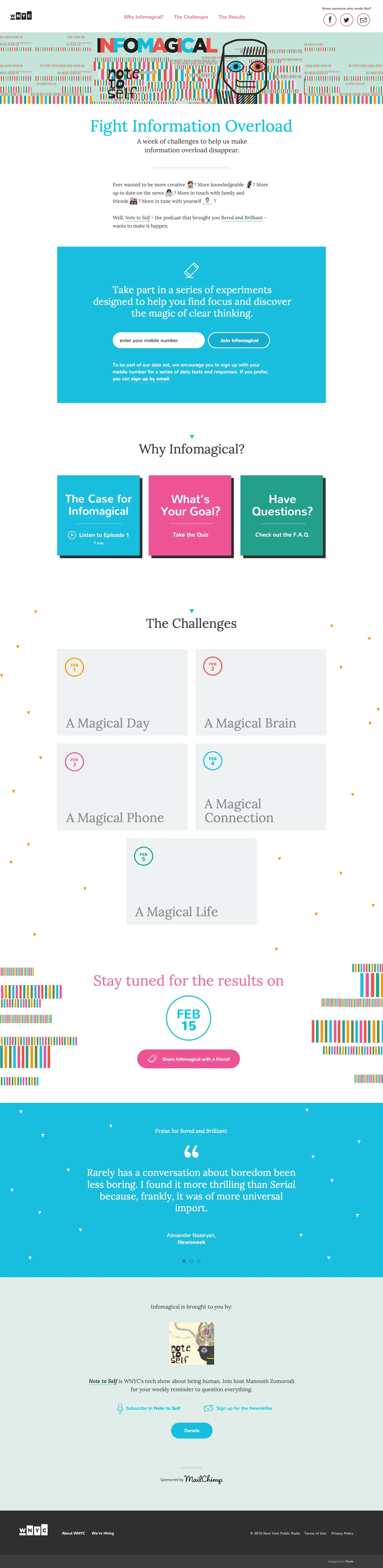
Visual design of the Infomagical page in the post-launch configuration.
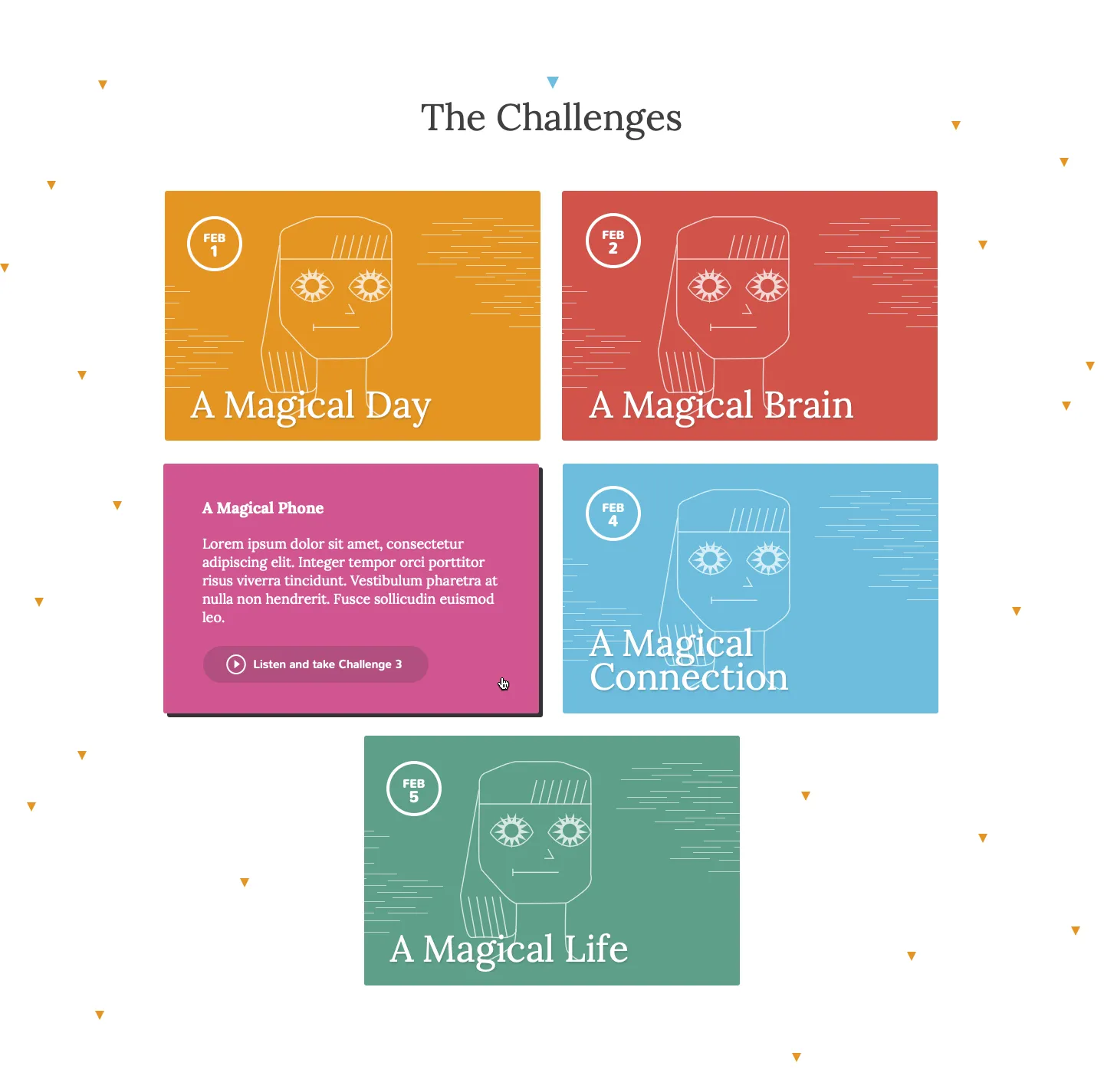
Hover effects document prepared for communication to the development team.
Cross-Functional Team Leadership
I led a joint team drawn from both organizations. Ronik supplied three designers and two developers. WNYC’s side was the show’s host, Manoush Zomorodi, and her producer.
Working with the on-air team changed the product. They had spent years learning how to hold an audience with audio, and that shaped the tone and pacing of the daily challenges. As a weekend public-radio listener, I got to watch the two media feed each other. When Manoush talked about the project on the show, the loop closed. The broadcast drove sign-ups, and the sign-ups gave the broadcast its story.
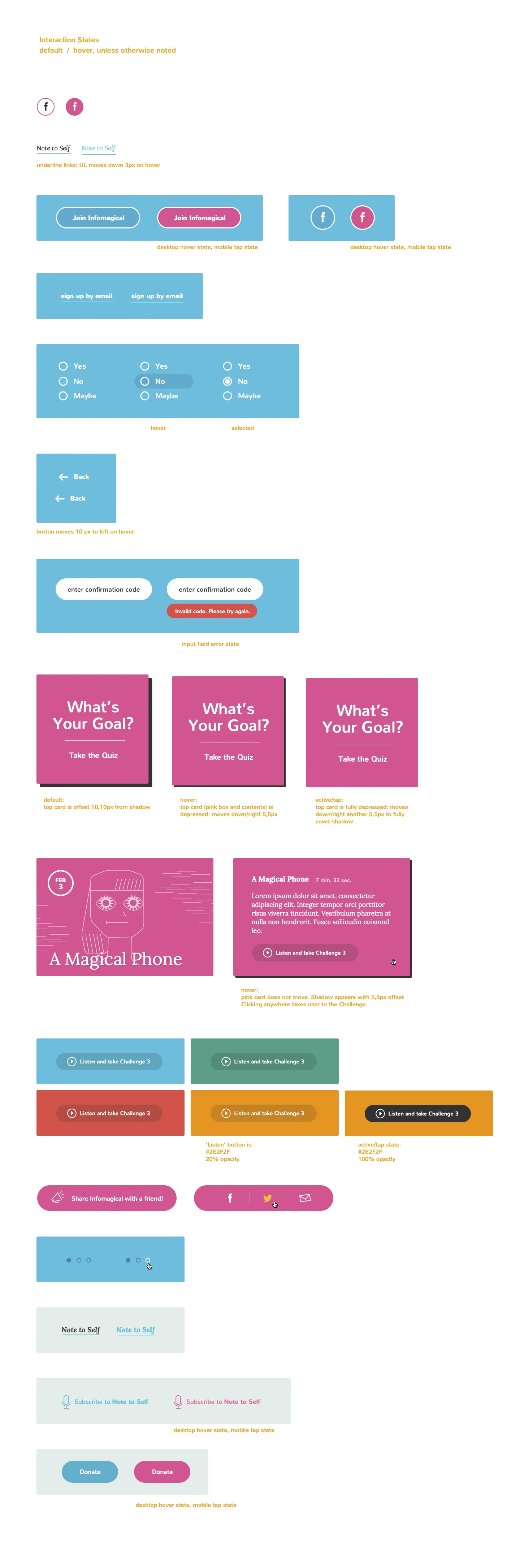
Component interaction states prepared to communicate with the development team
The editorial and technical sides of the team needed a way to work together without losing sight of the listener. That came down to:
- Regular cross-team design reviews
- One shared channel for both teams
- A defined process for making decisions
- Editorial and technical needs weighed together
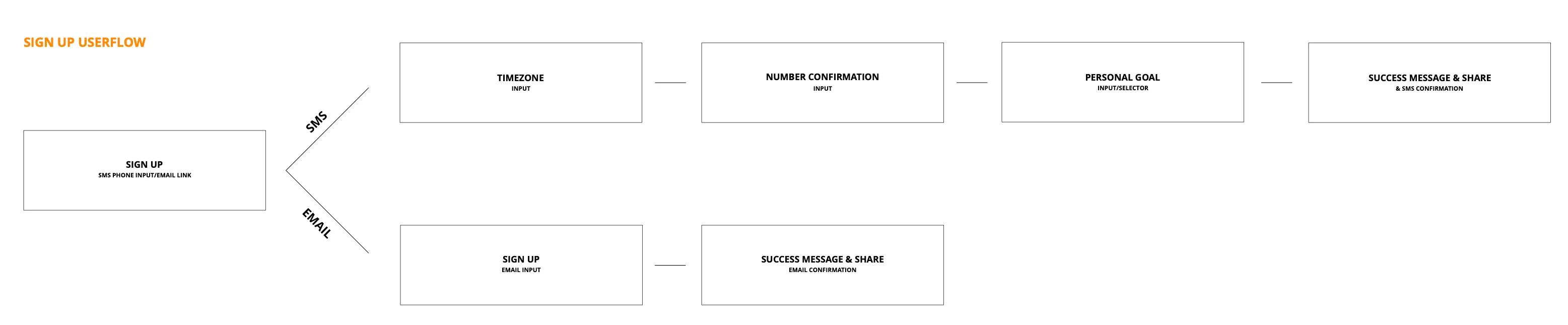
Pique sign-up user flow map prepared to communicate with the development team
Technical Direction & Implementation
I designed the technical architecture: a custom microsite, an SMS integration on Twilio that handled all participant messaging, and analytics to measure sign-ups, participation, and completion. The participant journey ran in three phases (awareness, engagement, and conversion), and each phase had its own instrumentation.
- Custom microsite architecture
- SMS integration system
- Multi-phase user experience
- Analytics implementation
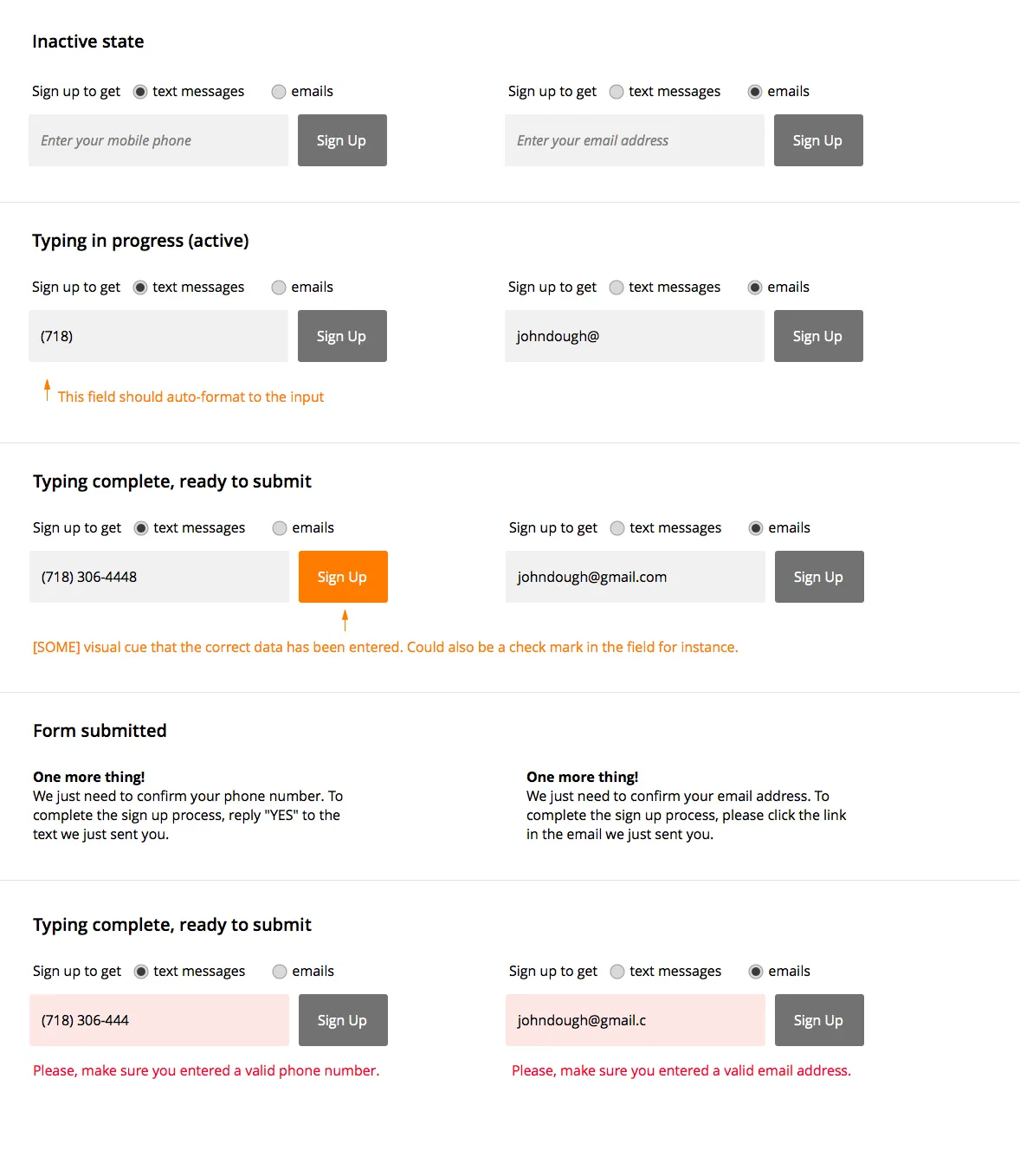
Pique form component states
Project Impact
More than 25,000 people took part, and the system handled over 300,000 text messages during the run. In the follow-up survey, 71% of participants said they were satisfied with the experience. The project also drew coverage from NPR, Fast Company, and Twilio, which gave WNYC a public example of what its digital team could do.
- Over 25,000 active participants
- Over 300,000 text messages sent and received
- 71% participant satisfaction
- Coverage from NPR, Fast Company, and Twilio
Media Coverage
The project was covered outside WNYC’s own audience, from NPR to the technology press. These are the pieces worth reading.
- WNYC Note to Self introduction article
- WNYC Note to Self results article
- NPR’s coverage of the project
- Fast Company’s coverage of the project
- Twilio’s coverage of the project
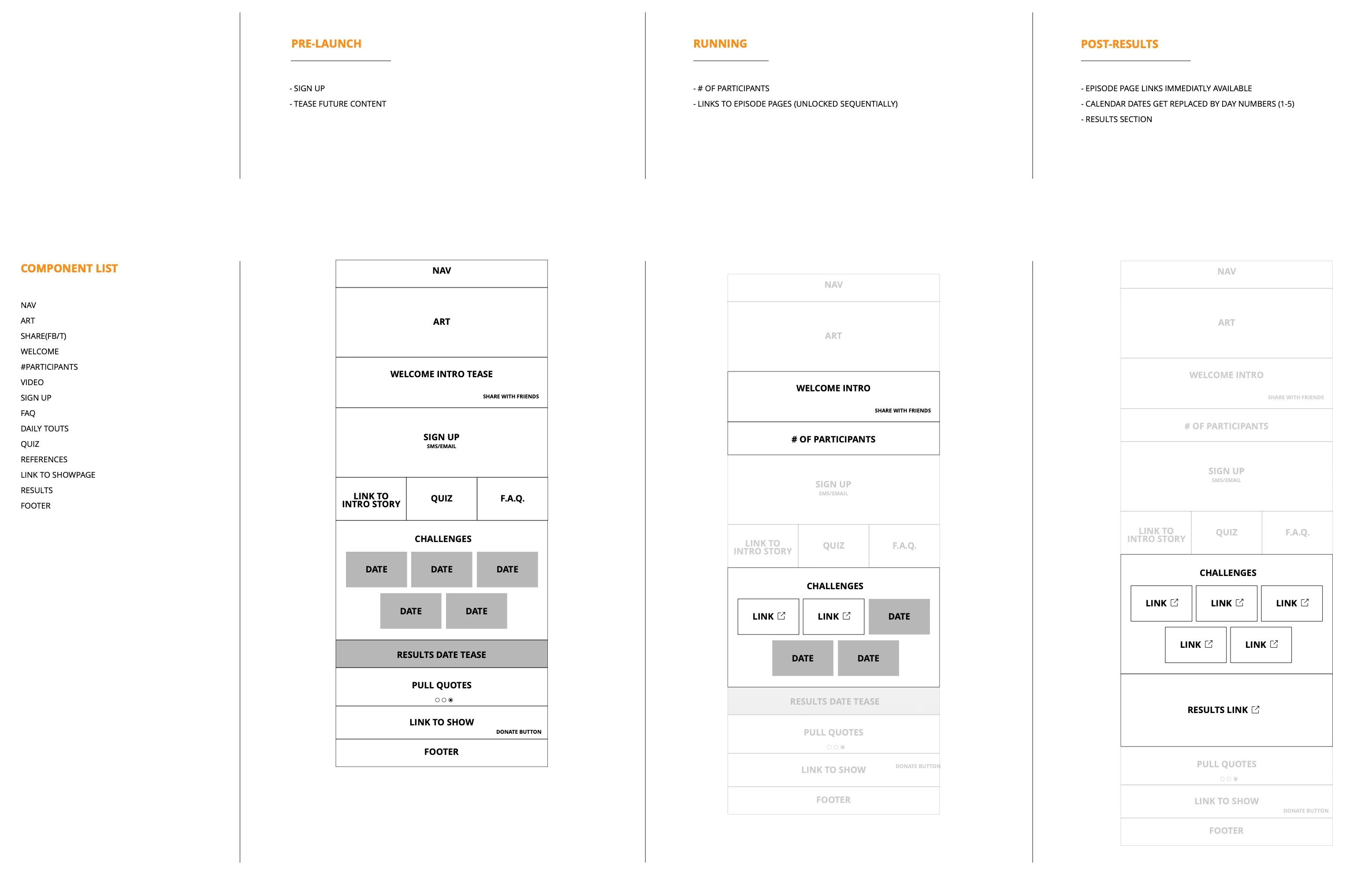
Map of how components change over the three project phases.

Pique signup flow on desktop
Project 2: WNYC platform redesign
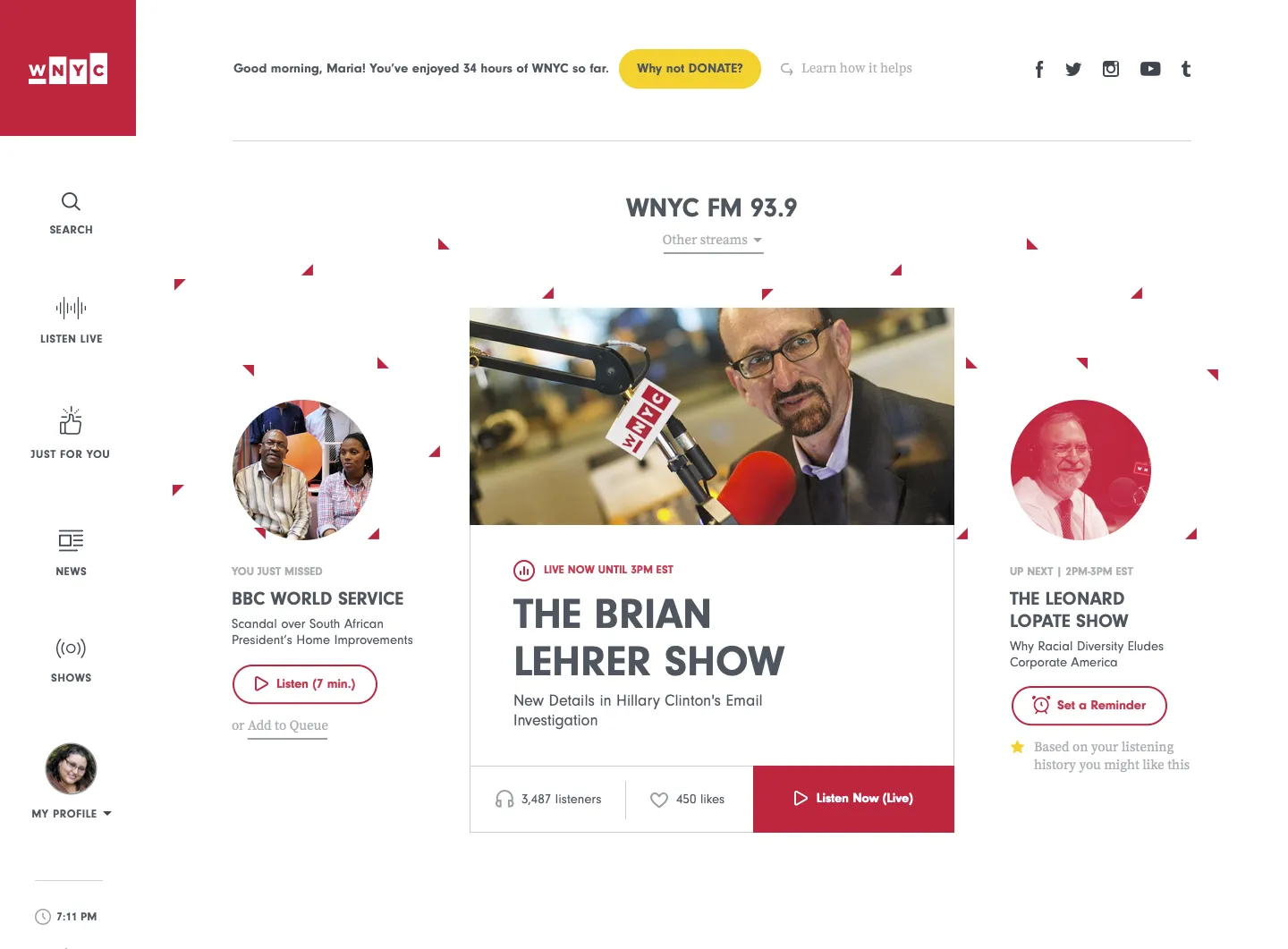
Visual design of the wnyc.org website
Strategic Leadership
I led a redesign concept for wnyc.org. The brief was to rethink how audiences find and listen to WNYC content across devices, measured against listening time, retention, and donation conversion. The station depends on member support, so the design had to serve listeners and the fundraising operation at once.
Original goals included:
- Audience retention and growth
- Cross-platform engagement
- Increase listening time
- Fundraising effectiveness
Stakeholder Management
Four groups inside WNYC had a stake in the redesign, and each wanted something different from it. We ran workshops and review sessions with all of them so that editorial, engineering, marketing, and leadership could see each other’s constraints before decisions were made.
Key stakeholder groups included:
- Content teams focused on editorial presentation
- Technical teams evaluating implementation feasibility
- Marketing teams driving audience growth
- Executive leadership looking for measurable outcomes
Design Leadership & Execution
We planned the work in stages and checked each stage against the goals above. Stakeholder reviews ran on a regular cadence and did more than collect feedback. They were where the internal teams built agreement on the direction.
Core approach elements:
- Goals agreed across stakeholders
- Measurable outcomes as the test for each decision
- New ideas checked against what WNYC could build
- Buy-in built through regular reviews
User Experience Strategy
The concept combined the live broadcast with on-demand listening in one player. A personalization layer let listeners build their own queue from WNYC’s shows, while host-curated playlists kept the human editorial voice that public radio depends on.
Key experience innovations:
- A personalized stream combining live and on-demand content
- Playlists curated by hosts, guests, and community members
- Sharing and community features
- Playback that continues across devices
Design Solutions
The redesigned platform put discovery, playback, and community features in one interface, with donation prompts placed where a listener has just gotten something of value from the station.
Key design implementations:
- Redesigned homepage emphasizing the current listening context
- Created unified audio player experience
- Developed personalized content feed
- Donation prompts placed at the right moments
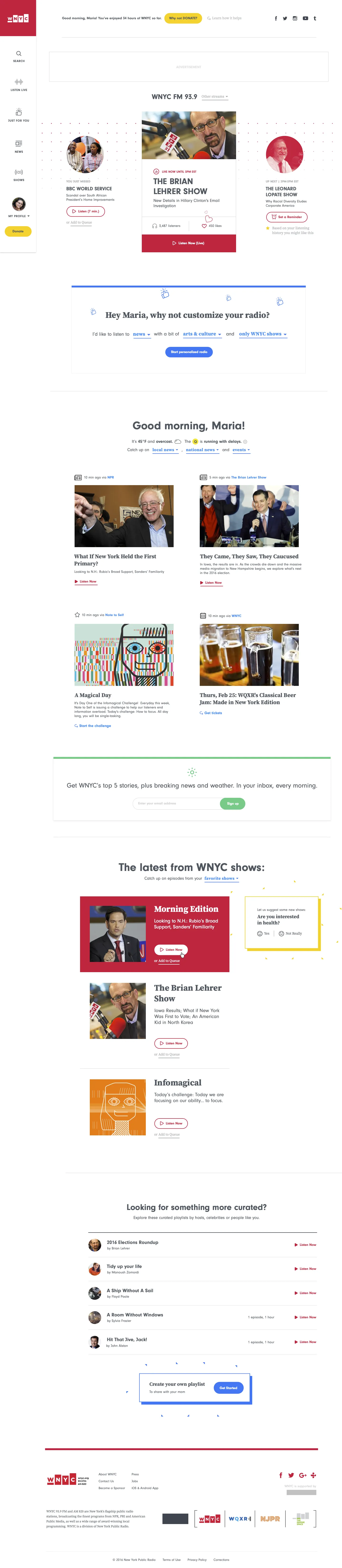
WNYC Homepage Visual Design
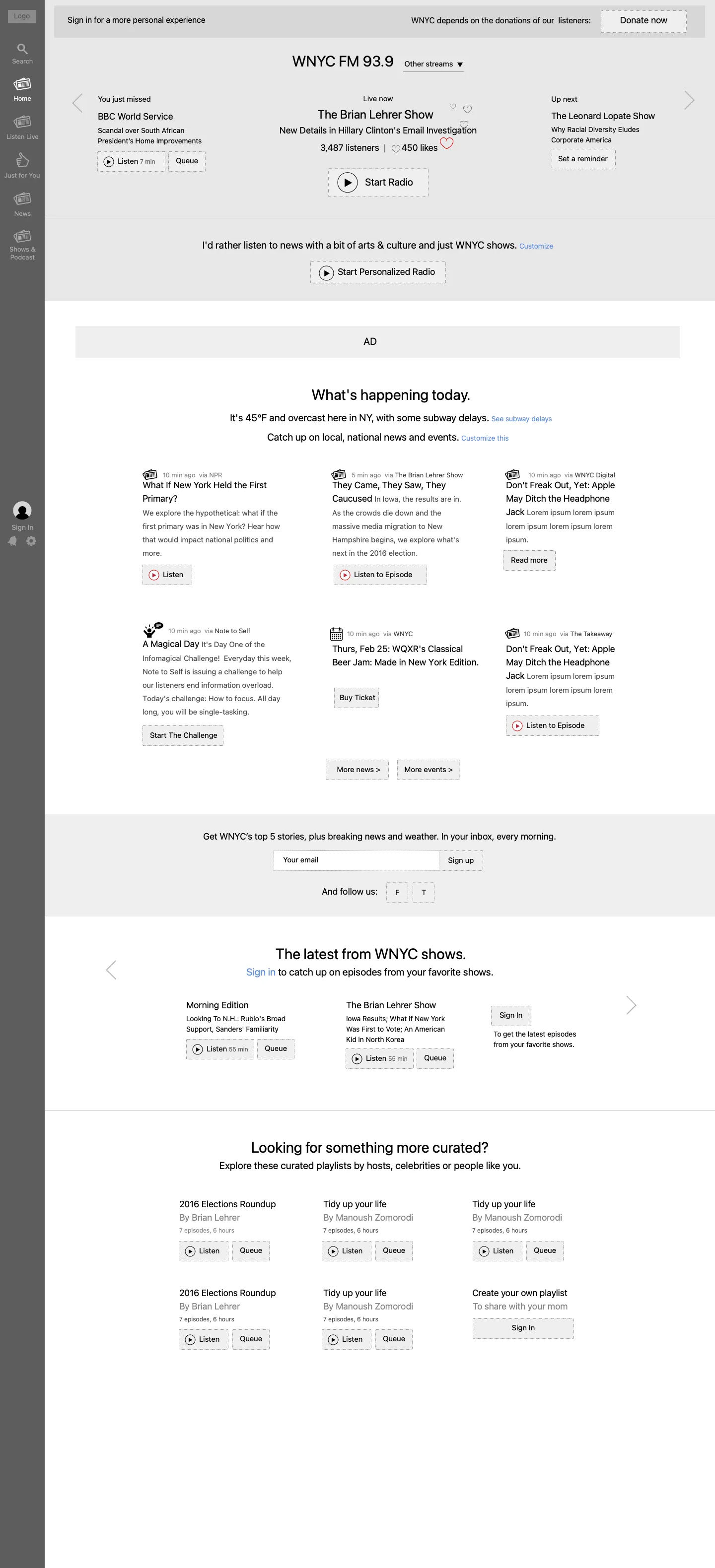
WNYC Homepage Wireframe
Design Research & Validation
Design decisions were grounded in:
- Analysis of existing WNYC audience behavior
- Review of emerging digital audio consumption patterns
- Regular feedback from WNYC’s content and technical teams
- Validation sessions with internal stakeholders
Project Outcomes
The project delivered:
- A set of concepts for digital audio listening
- Internal alignment on the platform’s direction
- A framework for incremental improvements
- Patterns for content personalization
Although WNYC didn’t implement the full redesign as envisioned, our concepts and patterns influenced later WNYC digital initiatives.
Project 3: Pique, a podcast app from a design sprint
Design Sprint Leadership
I facilitated the sprint, which drew participants from WNYC’s editorial, product, design, and engineering departments. The hard part was fitting a sprint into a large media organization’s calendar without losing momentum between sessions.
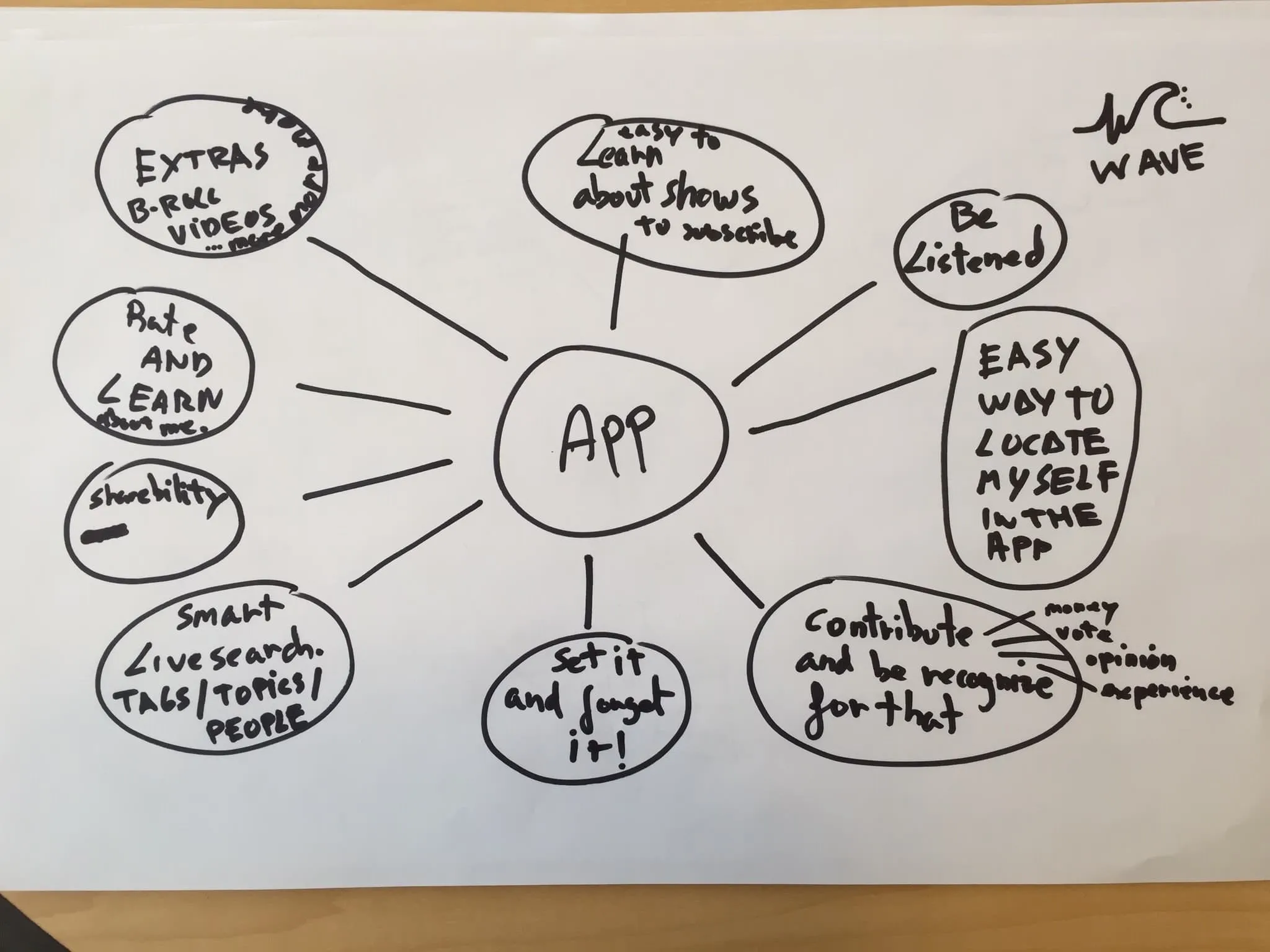
Participant solution mapping exercise artifact
Strategic Process Adaptation
Starting from Jake Knapp’s five-day Design Sprint, I stretched the format to ten days so it could:
- Fit stakeholders’ schedules across departments
- Keep the group together between sessions
- Get the same people in the room each time
- Leave room for documentation and synthesis between days
Sprint Structure
Day 1: Problem Definition & Mapping
- Define key questions and project goals
- Map current WNYC mobile product experience
- Identify opportunities in the podcast space
- Build shared understanding across stakeholders
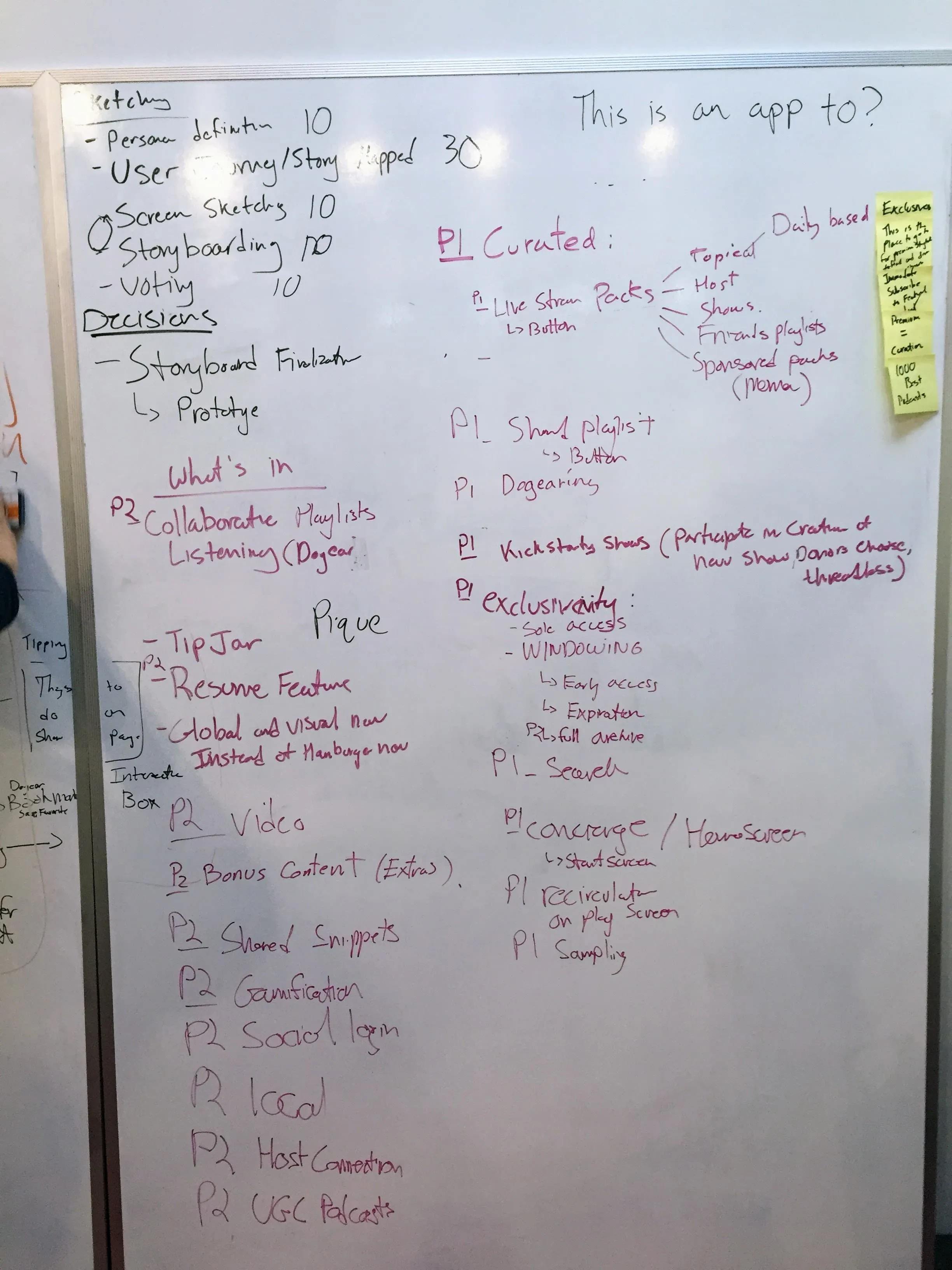
Design Sprint whiteboard showing activities and decisions
Day 2: Solution Sketching
- Facilitate structured sketching exercises
- Capture technical and editorial perspectives
- Explore multiple product directions
- Encourage individual ideation

Participant Storyboards from design sprint activity
Day 3: Solution Evaluation
- Implement a structured voting system
- Facilitate direction discussions
- Build consensus around a final approach
- Prepare foundation for prototyping
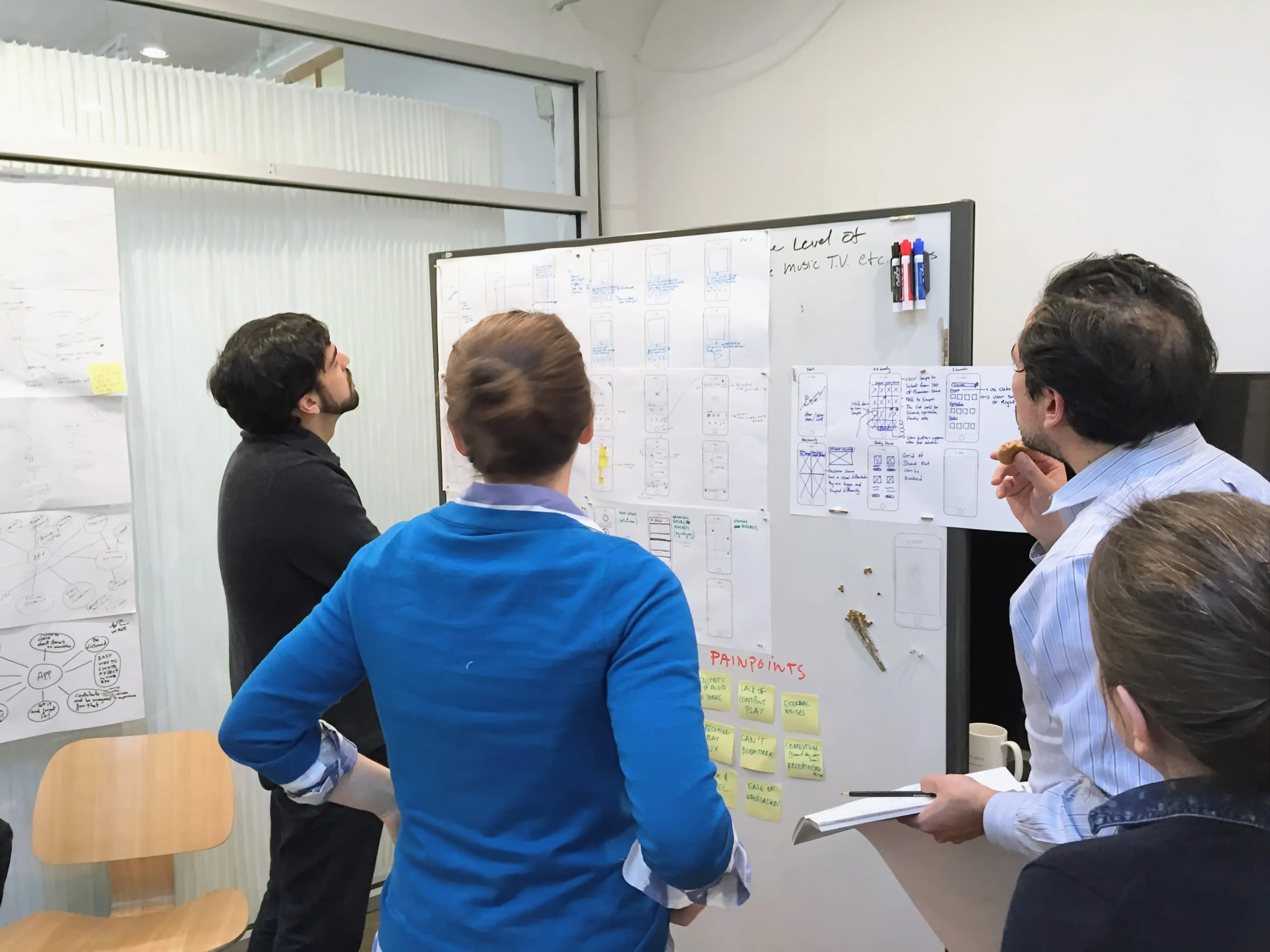
Mark leading participants in a design sprint exercise.
Day 4: Prototype Development
- Focus on core user flows
- Build interactive HTML prototype
- Simulate key product features
- Prepare testing scenarios
Day 5: User Testing
- Conduct four one-on-one usability sessions
- Test with recruited WNYC listeners
- Gather qualitative feedback
- Document key findings
Prototype of Pique app delivered for user testing at the end of the design sprint.
Analytics Platform Development
After the sprint, we designed an analytics dashboard for the app, giving WNYC a view of podcast listening it did not have from its existing tools.
Real-Time Insights
- Live listener counts with geographic distribution
- Current episode performance metrics
- Instant feedback on content engagement
Episode Performance
- Detailed listening patterns and drop-off points
- Total listens and unique listener counts
- Listener retention analysis
- Episode comparison tools
Audience Engagement
- Returning listener metrics
- Bookmark and sharing analytics
- Cross-episode listening patterns
- Content category performance
Monetization Metrics
- Donation conversion tracking
- Ad impression delivery
- Show-specific generosity indices
- Historical funding patterns
Dashboard Design
The dashboard was organized by:

Pique analytics dashboard. Delivered as a post-design sprint continuation of the project.
Information Hierarchy
- High-level show health indicators
- Detailed episode analytics
- Historical trend analysis
- Comparative performance metrics
Visual Data Presentation
- Interactive trend graphs
- Real-time listener visualizations
- Engagement funnel displays
- Custom reporting tools
Strategic Impact
- Enable data-driven content decisions
- Provide detailed insight into listener behavior
- Support monetization strategies
- Give WNYC’s app something competing podcast apps lacked
Skills & Methods
The three projects drew on four kinds of work:
Design Leadership
I ran the design sprints and adapted the format to each project. Reusable design systems kept the work consistent across platforms and shortened delivery. I set product strategy with WNYC’s stakeholders, defined the information architecture, and directed the visual design, with interactive prototypes as the main way we tested ideas.
- Design sprint facilitation and adaptation
- Design system development
- Cross-platform product strategy
- Information architecture
- Interactive prototyping
- Visual design direction
Research Methods
I ran the usability testing, conducted the user interviews, and analyzed what came back. Prototypes were validated against analytics and real usage data where we had it. Stakeholder interviews and structured critiques kept the work honest on the business side.
- Usability testing coordination
- User interview facilitation
- Analytics implementation
- Prototype validation
- Stakeholder interviews
- Design critique facilitation
Technical Direction
I oversaw the frontend architecture and its integration with WNYC’s content management system. The SMS system for Infomagical had to hold up under 25,000 participants, and the analytics dashboard for Pique had to answer real editorial questions. Cross-platform audio playback that stayed reliable on every device was the hardest engineering problem of the three.
- Frontend architecture planning
- CMS platform integration
- SMS system implementation
- Analytics dashboard development
- Cross-platform audio playback
- Performance optimization
Team Management
I managed the Ronik team and the client relationship at the same time. That included mentoring the designers, writing down our processes, and running sprint planning.
- Cross-functional team leadership
- Agency-client collaboration
- Stakeholder communication
- Design team mentorship
- Process documentation
- Sprint planning
Lessons Learned
Three lessons from these projects have stayed with me.
Adapting Processes for Scale
Infomagical was the first time we had built for 25,000 simultaneous participants, and our usual agency process did not stretch that far. The SMS system had to be load-tested, not assumed. We wrote down every decision, however small, because with two organizations working in parallel nobody could hold the whole picture in their head. And we planned for several participation scenarios, since we had no way to predict how many people would sign up.
Key elements that proved essential:
- Load-test before launch
- One channel for both organizations
- Write down every decision
- Plan for several participation levels
Balancing Innovation and Practicality
The platform redesign taught us how to hold an ambitious concept and a practical constraint at the same time. Involving stakeholders in the key decisions gave the concepts internal support they would not have had otherwise. We also built a simple rubric for judging speculative ideas against what WNYC could actually build, and we kept a record of which ideas held up and which did not.
Critical takeaways included:
- Hold ambition and constraints at the same time
- Build stakeholder buy-in through consistent involvement
- Create frameworks for evaluating speculative design
- Record which concepts held up
Leadership Through Structure
The Pique sprint showed that the facilitator’s job is to build a structure the group can decide inside, rather than to make the decisions. Adapting the sprint format to WNYC’s culture mattered more than following the book. Clear milestones kept the group focused across a ten-day span, and a structured vote produced a direction that people from four departments could live with.
Essential leadership insights gained:
- Adapt the method to the organization
- Keep momentum across a longer schedule
- Use structured decisions to build consensus
- Turn user feedback into a product direction
Conclusion
Three projects, three different outcomes. Infomagical shipped and reached 25,000 people. The platform redesign was never built in full, but its patterns turned up in later WNYC work. Pique went from sprint to prototype to an analytics design.
What I am proudest of is the team. The designers and developers on these projects handled a live SMS system, a large-organization redesign, and a cross-department sprint, and got better at each one.
The bigger takeaway is that design leadership is more than shipping product. It is building good teams, putting durable processes in place, and giving people room to do their best work.
Key accomplishments included:
- Led three digital initiatives from concept through delivery
- Managed stakeholders across editorial, engineering, marketing, and leadership
- Adapted the agency’s process to a 25,000-participant launch
- Kept speculative concepts grounded in what WNYC could build
- Built and mentored the team